The Stick

The Stick

Oct 19, 2015

Which Stick Do I Choose?

("What Does It Do?" - Part II)

Because people come in all shapes, sizes, and masses, Doc and his team have developed different Sticks for different body types. For example, if you’re a marathon runner, you might opt for the Marathon Stick. Its internal rod has the proper amount of recommended flex, its spindles are sized accordingly for lean muscles, and the grips will fit nimble hands. On the other extreme, if you’re a bodybuilder or a football player, you may need a heftier Stick such as the Big Stick or the Stiff Stick, which have less flexible internal rods, bigger spindles, and much larger hand grips. You’ll need something tough that can penetrate deep into thick muscle mass. If you travel a lot, the Travel Stick is the ideal size for tossing into your bag and having treatment on the go. Professional cyclists often prefer these. In all, there are dozens of designs, but 3 or 4 are the most popular and fit most people’s needs. We even have a Kid’s Stick (which works wonders for small athletes going through growing pains) and a Pet Stick that your horses and dogs will love!

So how do you choose? 


It depends upon your body type and needs. See below for a quick summary or click here for more detailed descriptions.


Sports Enthusiasts

Weightlifter, Bodybuilder, Football Player: 
The Big Stick or The Stiff Stick

Tennis, Golf, Mid-range Activities and Body Types: 
The Original Body Stick

People focusing on the Lower Body and Legs: 
The Sprinter Stick

Cyclists, Trekkers and Travelers:
The Travel Stick

Long Distance, World Class Runners: 
The Marathon Stick


For Complete Body Treatments

Over 6’ tall and 180 pounds: 
The Stick Pro System for complete body treatment

Under 6’ tall and 180 pounds: 
The Stick Fitness System for total management of every major muscle group


General Wellness and Treatment

For Advanced Muscle Management:
The Power Stick (included in the Pro System)

For those with Lean Bodies and/or Limited Range of Motion in the Upper Limbs: 
The Flex Stick

For those who need the “Granddaddy of Recovery,” especially when targeting localized areas and trigger points: 
The Hybrid Stick

Have trouble with Plantar Fasciitis or your feet?
The FootWheel - your arches and your feet will thank you!

Need trigger point therapy and myofascial release, especially near joints like elbows, wrists, ankles, and knees?
The TriggerWheel - we keep these at our desks, in our cars, and everywhere a flare-up might occur.

Aid to Others

What about your children and growing athletes?
The Little Stick

What about ailing pets, such as your aging dog? Or what about your thoroughbred horse who also needs muscle care?
The Pet Stick - they’ll love you for it!

Oct 5, 2015

What Does It Do?

Great question! And we’ve been getting this a lot.

To explain the many amazing benefits of The Stick, we’ll answer in a series of bite-sized posts so that it’s not so overwhelming – reason being, this device does many things. It may sound too good to be true once we list some of its more popular uses and treatments, but The Stick’s success is actually based upon sound science, physiology and biomechanics.

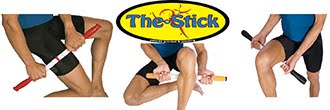
In short, The Stick is a tool that looks much like a rolling pin for the body. It’s crafted with a flexible internal rod overlapped by multiple freely-rotating spindles. Comfortable grips at either end allow The Stick to be held securely while in use. On a side note, we use space-age waterproof materials for The Stick, and these materials are environmentally sound and meet all governmental regulations. They are also tested to be ideal when used against bare skin, which is very important. The Stick is wildly durable and is manufactured to such high-quality specs that you should expect to use it for a lifetime.

Short story: the doctor who created The Stick wanted a way to encourage his patients to continue to treat themselves in between visits to his office; so he came up with The Stick’s design based upon a need for convenience, patient self-use and control, and the doctor’s own intimate knowledge of anatomy, physiology, exercise science, and health.

Doc knew The Stick would need to treat knots and irritated nodes within the muscles, sometimes referred to as “trigger points,” as well as be a device that could encourage ample blood flow into larger muscle groups. Blood is a major component of healing – it carries fresh oxygen and other healthy elements into soft tissues – and it also helps flush cellular waste materials and lactic acid away from tired, injured areas. Think of blood as the conduit for bringing healthy ingredients in and removing toxic wastes away. By properly rolling key parts of the body, not only does fresh blood flow into the area and work its magic, the warmed soft tissues receive the benefits of a ‘passive stretch.’ That passive stretch keeps tissues flexible and pliable and has been proven to increase flexibility and muscle performance.

And this is just the tip of the melting iceberg for The Stick! We’ll discuss its actual health benefits in future blogs – and yes, it is used in physical therapy and medicinal arenas as well.

Toyin Augustus, Olympic Hurdler - Nigeria
Because people come in all shapes, sizes, and masses, Doc and his team have developed different Sticks for different body types. For example, if you’re a marathon runner, you might opt for the Sprinter Stick. Its internal rod has the proper amount of recommended flex, its spindles are sized accordingly for lean muscles, and the grips will fit nimble hands. On the other extreme, if you’re a bodybuilder or a college football player, you may need a heftier Stick with a less flexible internal rod, bigger spindles, and much larger hand grips. You’ll need something tough that can penetrate deep into thick muscle mass. If you travel a lot, the Travel Stick is the ideal size for tossing into your bag and having something handy to do the trick. In all, there are dozens of designs, but 3 or 4 are the most popular and fit most people’s needs. We even have a Kid’s Stick (which works wonders for small athletes going through growing pains) and a Pet Stick that your horses and dogs will love! Don’t worry, we’ll explain the different types in future posts (coming soon!), but know that we have expertly designed Sticks, crafted for your explicit needs.

You may hear of The Stick being described as “A Toothbrush for Your Muscles” (in that it pushes cellular wastes out of the muscle while encouraging your muscle tissues to revert back to their natural elongated states), or as “A Magic Stick” as the Swahili-speaking porters on Mount Kilimanjaro nicknamed it.

Is it magic? No. Is it based on sound physiology and anatomy? Yes. Does it seem too simple? For some, yes. But does it work? Absolutely!

If you’d like more details, feel free to peruse our corporate website for all kinds of information: www.intracell.info, or call our offices at 1-800-554-1501. We’d be happy to speak with you and answer your questions!


TeamStick Insider

What Does It Do? (Pt II)
What Does It Do? (Pt III)

Sep 20, 2015

Calf Heart Attack

When was the last time you heard of a “Calf Heart Attack?” 

It may have been a while, if at all…but it’s worth mentioning again. If you don’t know about it, it’s been dubbed “a weird but serious injury.” (Parker, 1996, Running Times)

A ‘calf heart attack’ isn’t directly related to the heart muscle – but here’s how it’s like a heart attack: the outer sheath surrounding the gastrocnemius (calf muscle) isn’t flexible enough to handle the increased blood flow to the area during exercise. When this happens, the sheath can’t expand to accommodate the extra blood, and the swollen gastroc doesn’t have enough room within the constriction…and that can often become problematic, sometimes causing micro-tears (or larger) within the calf muscle. Eventually, when those torn fibers heal, they’re re-enforced with scar tissue (which is less flexible than the original muscle tissue), and that often leads to another injury. It’s a recipe for cyclical tears and recurrences…and pain.

It’s not the same as a calf pull. For those of you who have pulled a calf, that sensation is a true muscle pull, and it can be debilitating; but the “calf heart attack” is a deeper-rooted pain caused by ripped fibers that take longer to heal and are often susceptible to continued re-injury.

John L. Parker, Jr, associate publisher and editorial director of Running Times magazine, was a sufferer of this type of repetitive injury until he realized that he needed to treat it differently – and regularly – with purposeful attention and care. His treatments included down time for healing, cautious re-entry into running, attentive stretching, and regular massages with The Stick.

In addition to his normal routine, he gave focused care to those micro-rips deep in the gastroc. They needed this extra attention to promote true, long-term healing.

So if you, too, have been having recurrences of a deep calf injury that won’t seem to go away, think of the micro-tears associated with a calf heart attack. It’s not a muscle pull and it won’t heal the same way. Allow your calves ample time to rest and recover before starting your running/exercise routine; begin again slowly with caution and ease; and be sure to stretch and massage the calf, encouraging fresh oxygenated blood flow to move deeper into the area in order to activate targeted and thorough healing. Then repeat on a regular basis.

It’s an oldie but a goodie – watch out for “calf heart attacks,” and don’t let them hold you back.

Parker’s Running Times Article

TeamStick Insider